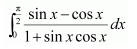
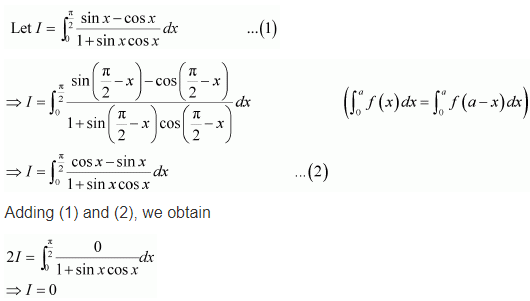
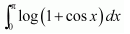
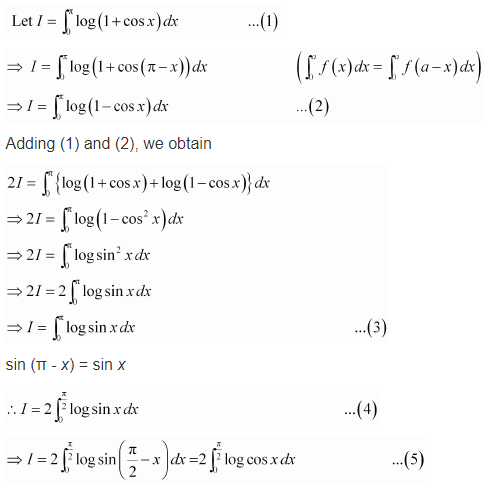
NCERT Solutions For Class 6 Maths Playing With Numbers Exercise 3.5

NCERT Solutions For Class 6 Maths Playing With Numbers Exercise 3.5

NCERT Solutions for Class 6 Maths Chapter 3 Playing With Numbers Ex 3.5

Exercise 3.5

Question 1.
Which of the following statements are true?
(a) If a number is divisible by 3, it must be divisible by 9.
(b) If a number is divisible by 9, it must be divisible by 3.
(c) A number is divisible by 18, if it is divisible by both 3 and 6.
(d) If a number is divisible by 9 and 10 both, then it must be divisible by 90.
(e) If two numbers are co-primes, at least one of them must be prime.
(f) All numbers which are divisible by 4 must also be divisible by 8.
(g) All numbers which are divisible by 8 must also be divisible by 4.
(h) If a number exactly divides two numbers separately,- it must exactly divide their sum.
(i) If a number exactly divides the sum of two numbers, it must exactly divide the two numbers separately.
Solution:
(a) False
(b) True
(c) False
(d) True
(e) False
(f) False
(g) True
(h) True
(i) False

Question 2.
Here are two different factor trees for 60. Write the missing numbers.
NCERT Solutions for Class 6 Maths Chapter 3 Playing With Numbers
Solution:
Given that
NCERT Solutions for Class 6 Maths Chapter 3 Playing With Numbers
Here, 6 = 2 x missing number
∴ Missing number = 6 2 = 3
Similarly, 10 = 5 x missing number
∴ Missing number = 10 ÷ 5 = 2
Hence, the missing numbers are 3 and 2.

(b) Given that:
NCERT Solutions for Class 6 Maths Chapter 3 Playing With Numbers
Let the missing numbers be m1, m2, m3 and m4.
60 = 30 x m1
⇒ m1 = 60 ÷ 30 = 2
30 = 10 x m2
⇒ m2 = 30 ÷ 10 = 3
10 = m3 x m4
⇒ m3 = 2 or 5 and m4 = 5 or 2
Hence, the missing numbers are 2, 3, 2, 5.

Question 3.
Which factors are not included in the prime factorisation of a composite number?
Solution:
1 and the number itself are not included in the prime factorisation of a composite number.

Question 4.
Write the greatest 4-digit number and express it in terms of its prime factors.
Solution:
The greatest 4-digit number = 9999
NCERT Solutions for Class 6 Maths Chapter 3 Playing With Numbers
Hence, the prime factors of 9999 = 3 x 3 x 11 x 101.

Question 5.
Write the smallest 5-digit number and express it in the form of its prime factors.
Solution:
The smallest 5-digit number = 10000
NCERT Solutions for Class 6 Maths Chapter 3 Playing With Numbers
Hence, the required prime factors: 10000 = 2 x 2 x 2 x 2 x 5 x 5 x 5 x 5.

Question 6.
Find all the prime factors of 1729 and arrange them in ascending order. Now state the relations, if any, between the two consecutive prime factors.
Solution:
Given number = 1729
NCERT Solutions for Class 6 Maths Chapter 3 Playing With Numbers
Hence, the prime factors of 1729 = 7 x 13 x 19.
Here, 13 – 7 = 6 and 19 – 13 = 6
We see that the difference between two consecutive prime factors is 6.

Question 7.
The product of three consecutive numbers is always divisible by 6. Verify this statement with the help of some examples.
Solution:
Example 1:
Take three consecutive numbers 20, 21 and 22.
Here 20 is divisible by 2 and 21 is divisible by 3.
Therefore, the product 20 x 21 x 22 = 9240 is divisible by 6.

Example 2:
Take three consecutive numbers 30; 31 and 32.
Here 30 is divisible by 3 and 32 is divisible by 2.
Therefore, the product 30 x 31 x 32 = 29760 is divisible by 6.

Example 3:
Take three consecutive numbers 48, 49 and 50.
Here, 48 is divisible by 3 and 50 is divisible by 2.
Therefore, the product 48 x 49 x 50 = 117600 which is divisible by 6.

Question 8.
The sum of two consecutive odd numbers is divisible by 4. Verify this statement with the help of some examples.
Solution:
Example 1:
Let us take two consecutive odd numbers 97 and 99.
Sum = 97 + 99 = 196
Here, the number formed by last two digits is 96 which is divisible by 4.
Hence, the sum of numbers 97 and 99 i.e. 196 is divisible by 4.

Example 2:
Let us take two consecutive odd numbers 121 and 123.
Sum = 121 + 123 = 244
Here, the number formed by last two digits is 44 which is divisible by 4.

Example 3:
Let us take two consecutive odd numbers 105 and 107.
Sum = 105 + 107 = 212
Here, the number formed by the last two digits is 12 which is divisible by 4.

Question 9.
In which of the following expressions, prime factorisation has been done?
(a) 24 = 2 x 3 x 4
(b) 56 = 7 x 2 x 2 x 2
(c) 70 = 2 x 5 x 7
(d) 54 = 2 x 3 x 9.
Solution:
(a) 24 = 2 x 3 x 4
Here, 4 is not a prime number.
Hence, 24 = 2 x 3 x 4 is not a prime factorisation.

(b) 56 = 7 x 2 x 2 x 2
Here, all factors are prime numbers
Hence, 56 = 7 x 2 x 2 x 2 is a prime factorisation.

(c) 70 = 2 x 5 x 7
Here, all factors are prime numbers.
Hence, 70 = 2 x 5 x 7 is a prime factorisation.

(d) 54 = 2 x 3 x 9
Here, 9 is not a prime number.
Hence, 54 = 2 x 3 x 9 is not a prime factorisation.

Question 10.
Determine if 25110 is divisible by 45.
Solution:
45 = 5 x 9
Here, 5 and 9 are co-prime numbers.
Test of divisibility by 5: unit place of the given number 25110 is 0. So, it is divisible by 5.
Test of divisibility by 9:
Sum of the digits = 2 + 5 + l + l + 0 = 9 which is divisible by 9.
So, the given number is divisible by 5 and 9 both. Hence, the number 25110 is divisible by 45.

Question 11.
18 is divisible by both 2 and 3. It is also divisible by 2 x 3 = 6. Similarly, a number is divisible by both 4 and 6. Can we say that the number must also be divisible by 4 x 6 = 24? If not, give an example to justify your answer.
Solution:
Here, the given two numbers are not co-prime. So, it is not necessary that a number divisible by both 4 and 6, must also be divisible by their product 4 x 6 = 24.
Example: 36 and 60 are divisible by 4, both 4 and 6 but not by 24.

Question 12.
I am the smallest number, having four different prime factors. Can you find me?
Solution:
We know that the smallest 4 prime numbers are 2, 3, 5 and 7.
Hence, the required number = 2 x 3 x 5 x 7 = 210

NCERT SolutionsMathsScienceSocialEnglishHindiSanskritRD Sharma

NCERT Solutions For Class 6 Maths Playing With Numbers Exercise 3.2

NCERT Solutions For Class 6 Maths Playing With Numbers Exercise 3.2

NCERT Solutions for Class 6 Maths Chapter 3 Playing With Numbers Ex 3.2

Exercise 3.2

Question 1.
What is the sum of any two:
(a) Odd numbers?
(b) Even numbers?
Solution:
(a) The sum of any two odd numbers is even.
(b) The sum of any two even numbers is even.

Question 2.
State whether the following statements are True or False.
(a) The sum of three odd numbers is even.
(b) The sum of two odd numbers and one even number is even.
(c) The product of three odd numbers is odd.
(d) If an even number is divided by 2, the quotient is always odd.
(e) All prime numbers are odd.
(f) Prime numbers do not have any factors.
(g) Sum of two prime numbers is always even.
(h) 2 is only the even prime number.
(i) All even numbers are composite numbers.
(j) The product of any two even numbers is always even.
Solution:
(а) False [∵ 3 + 5 + 7 = 15 (odd)]
(b) True [∵ 3 + 5 + 6 = 14 (even)]
(c) True [∵ 5 x 7 x 9 = 315 (odd)]
(d) False [∵ 6 + 2 = 3 (odd)]
(e) False [∵ 2 is a prime number but it is even]
(f) False [∵ 3 is a prime number having 1 and 3 as its factors]
(g) False [∵ 7 + 2 = 9 (odd)]
(h) True [∵ 2 is even and the lowest prime number]
(i) False [∵ 2 is even but not composite number]
(j) True [∵ 4 x 6 = 24 (even)]

Question 3.
The numbers 13 and 31 are prime numbers. Both these numbers have same digits 1 and 3. Find such pairs of prime numbers up to 100.
Solution:
The required pair of prime numbers having same digits are:
(17 and 71), (37 and 73), (79 and 97).

Question 4.
Write down separately the prime and composite numbers less than 20.
Solution:
Prime numbers less than 20 are:
2, 3, 5, 7, 11, 13, 17 and 19
Composite numbers less than 20 are:
4, 6, 8, 9, 10, 12, 14, 15, 16 and 18

Question 5.
What is the greatest prime number between 1 and 10?
Solution:
The greatest prime number between 1 and 10 is 7.

Question 6.
Express the following as the sum of two odd primes.
(a) 44
(b) 36
(c) 24
(d) 18
Solution:
(a) 44 = 13 + 31
(b) 36 = 17 + 19
(c) 24 = 7 + 17
(d) 18 = 7 + 11

Question 7.
Give three pairs of prime numbers whose difference is 2.
[Remark: Two prime numbers whose difference is 2 are called twin primes]
Solution:
Required pairs are: (3 and 5), (5 and 7) and (11 and 13)

Question 8.
Which of the following numbers are prime?
(a) 23
(b) 51
(c) 37
(d) 26
Solution:
(a) 23 is a prime number [ ∵ 23 = 1 x 23]
(b) 51 is not a prime number [∵ 51 = 1 x 3 x 17]
(c) 37 is a prime number [∵ 37 = 1 x 37]
(d) 26 is not a prime number [∵ 26 = 1 x 2 x 13]

Question 9.
Write seven consecutive composite numbers less than 100 so that there is no prime number between them.
Solution:
Required seven consecutive composite numbers are:
90, 91, 92, 93, 94, 95 and 96

Question 10.
Express each of the following numbers as the sum of three odd primes.
(a) 21
(b) 31
(c) 53
(d) 61
Solution:
(a) 21 can be expressed as 3 + 5 + 13
(b) 31 can be expressed as 5 + 7 + 19
(c) 53 can be expressed as 13 + 17 + 23
(d) 61 can be expressed as 11 + 13 + 37

Question 11.
Write five pairs of prime numbers less than 20 whose sum is divisible by 5.
(Hint: 3 + 7 = 10)
Solution:
Required pairs of prime numbers less than 20 are:
(i) 2 + 3 = 5
(ii) 2 + 13 = 15
(iii) 11 + 9 = 20
(iv) 17 + 3 = 20
(v) 7 + 13 = 20

Question 12.
Fill in the blanks.
(a) A number which has only two factors is called a ………… .
(b) A number which has more than two factors is called a ………… .
(c) 1 is neither ………… nor ………… .
(d) The smallest prime number is ………… .
(e) The smallest composite number is ………… .
(f) The smallest even number is ………… .
Solution:
(a) prime number
(b) composite number
(c) prime, composite
(d) 2
(e) 4
(f) 2

NCERT SolutionsMathsScienceSocialEnglishHindiSanskritRD Sharma

NCERT Solutions For Class 6 Maths Understanding Elementary Shapes Ex 5.3

NCERT Solutions For Class 6 Maths Understanding Elementary Shapes Ex 5.3

Free download NCERT Solutions for Class 6 Maths Chapter 5 Ex 5.3 Understanding Elementary Shapes PDF for CBSE 2020 Exams.

You can also Download NCERT Class 6 Maths to help you to revise complete Syllabus and score more marks in your examinations.

NCERT Solutions For Class 6 Maths Chapter 5 Understanding Elementary Shapes Ex 5.3

Exercise 5.3

Question 1.
Match the following:
(i) Straight angle                  (a) Less than one-fourth of a revolution.
(ii) Right angle                      (b) More than half a revolution.
(iii) Acute angle                    (c) Half of a revolution.
(iv) Obtuse angle                  (d) One-fourth of a revolution.
(v) Reflex angle                     (e) Between \(\frac { 1 }{ 4 }\) and \(\frac { 1 }{ 2 }\) of a revolution.
–                                                (f) One complete revolution.

Solution:
(i) Straight angle          ↔       (c) Half of a revolution.
(ii) Right angle             ↔       (d) One-fourth of a revolution.
(iii) Acute angle            ↔       (a) Less than one-fourth of a revolution.
(iv) Obtuse angle         ↔        (e) Between \(\frac { 1 }{ 4 }\) and \(\frac { 1 }{ 2 }\) of a revolution.
(v) Reflex angle            ↔        (f) One complete revolution, right, acute, obtuse or reflex.

Question 2.
Classify each one of the following angles
NCERT Solutions For Class 6 Maths Chapter 5 Understanding Elementary Shapes
Solution:
(a) Acute angle
(b) Obtuse angle
(c) Right angle
(d) Reflex angle
(e) Straight angle
(f) Acute angle

NCERT-Solutions-For-Class-6-Maths-understanding-Elementary-Shapes-Exercise-5.3-01
NCERT-Solutions-For-Class-6-Maths-understanding-Elementary-Shapes-Exercise-5.3-02

NCERT SolutionsMathsScienceSocialEnglishHindiSanskritRD Sharma

NCERT Solutions for Class 12 Maths Chapter 7 Integers Ex 7.10

Get Free NCERT Solutions for Class 12 Maths Chapter 7 Integers Ex 7.10 PDF. Integration Class 12 Maths NCERT Solutions are extremely helpful while doing your homework. Exercise 7.10 Class 12 Maths NCERT Solutions were prepared by Experienced LearnCBSE.in Teachers. Detailed answers of all the questions in Chapter 7 Maths Class 12 Integrals Exercise 7.10 provided in NCERT Textbook.

Free download NCERT Solutions for Class 12 Maths Chapter 7 Exercise 7.10 Integrals PDF in Hindi Medium as well as in English Medium for CBSE, Uttarakhand, Bihar, MP Board, Gujarat Board, BIE, Intermediate and UP Board students, who are using NCERT Books based on updated CBSE Syllabus for the session 2019-20.

The topics and sub-topics included in the Integrals chapter are the following:

Section Name Topic Name
7 Integrals
7.1 Introduction
7.2 Integration as an Inverse Process of Differentiation
7.3 Methods of Integration
7.4 Integrals of some Particular Functions
7.5 Integration by Partial Fractions
7.6 Integration by Parts
7.7 Definite Integral
7.8 Fundamental Theorem of Calculus
7.9 Evaluation of Definite Integrals by Substitution
7.10 Some Properties of Definite Integrals

NCERT Solutions for Class 12 Maths Chapter 7 Integers Ex 7.10

NCERT Solutions for Class 12 Maths Chapter 7 Integers Ex 7.10 are part of NCERT Solutions for Class 12 Maths. Here we have given Class 12 Maths NCERT Solutions Integrals Ex 7.10

Question 1:
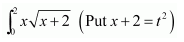
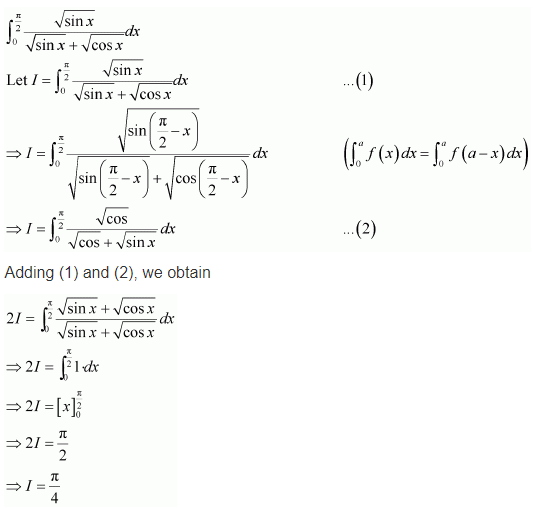
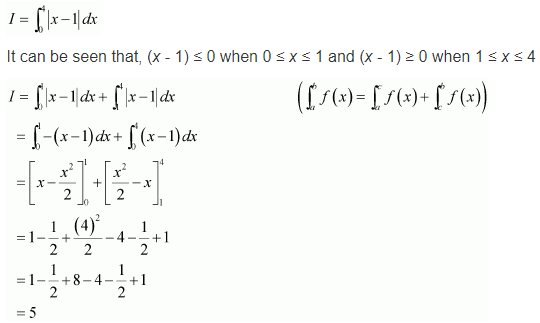
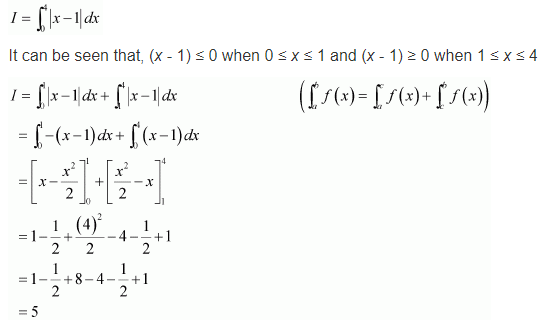
Ex 7.10 Integrals Class 12 NCERT Solutions Ex 7.10 Q 1
Solution:
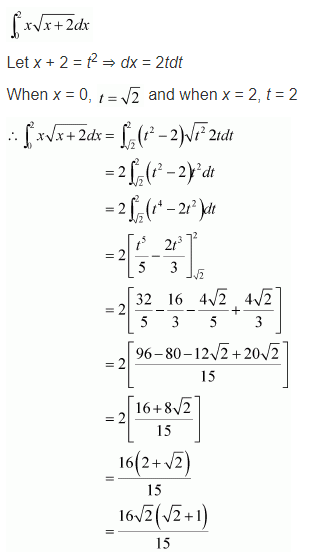
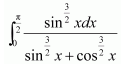
NCERT Solutions of Class 12 Maths Chapter 7 Integrals Ex 7.10 Q 1
Question 2:
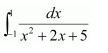
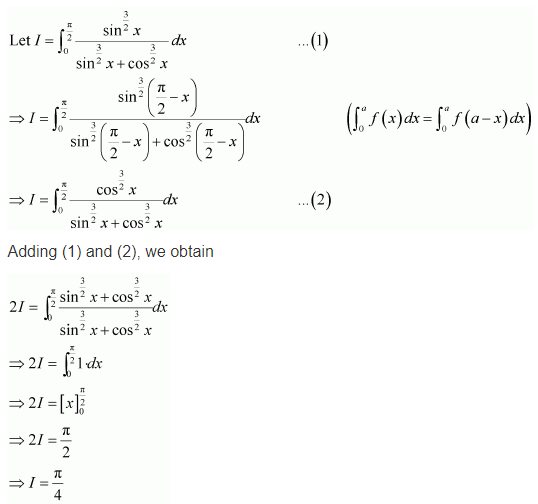
Ex 7.10 Integrals Class 12 NCERT Solutions Ex 7.10 Q 2
Solution:
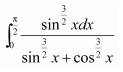
NCERT Solutions of Class 12 Maths Chapter 7 Integrals Ex 7.10 Q 2
Question 3:
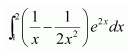
Ex 7.10 Integrals Class 12 NCERT Solutions Ex 7.10 Q 3
Solution:
NCERT Solutions of Class 12 Maths Chapter 7 Integrals Ex 7.10 Q 3
Question 4:
Integration Class 12 Ex 7.10 Q 4
Solution:
NCERT Solutions of Class 12 Maths Chapter 7 Integrals Ex 7.10 Q 4
Question 5:
Integration Class 12 Ex 7.10 Q 5
Solution:
NCERT Solutions of Class 12 Maths Chapter 7 Integrals Ex 7.10 Q 5
NCERT Solutions of Class 12 Maths Chapter 7 Integrals Ex 7.10 Q 5 - i
Question 6:
Integration Class 12 Ex 7.10 Q 6
Solution:
NCERT Class 12 Solutions Integrals Ex 7.10 Q 6
NCERT Class 12 Solutions Integrals Ex 7.10 Q 6 - i
Question 7:
Integration Class 12 Ex 7.10 Q 7
Solution:
NCERT Class 12 Solutions Integrals Ex 7.10 Q 7
Question 8:
Integrals Class 12 Ex 7.10 8
Solution:
NCERT Class 12 Solutions Integrals Ex 7.10 Q 8
Question 9:
Integration Class 12 Ex 7.10 Q 9
Solution:
ncert solution of maths class 12 Chapter 7 Ex 7.10 Q 9
Question 10:
Integrals Class 12 Ex 7.10 10
Solution:
ncert solution of maths class 12 Chapter 7 Ex 7.10 Q 10
Question 11:
Integrals Class 12 Ex 7.10 11
Solution:
ncert solution of maths class 12 Chapter 7 Ex 7.10 Q 11
ncert solution of maths class 12 Chapter 7 Ex 7.10 Q 11 - i
ncert solution of maths class 12 Chapter 7 Ex 7.10 Q 11 - ii
ncert solution of maths class 12 Chapter 7 Ex 7.10 Q 11 - iii
Question 12:
integrals class 12 ncert solutions Ex 7.10 Q 12
Solution:
NCERT Class 12 Solutions Ex 7.10 Q 12
NCERT Class 12 Solutions Ex 7.10 Q 12 - i
NCERT Class 12 Solutions Ex 7.10 Q 12 - ii
Question 13:
integrals class 12 ncert solutions Ex 7.10 Q 13
Solution:
NCERT Class 12 Solutions Ex 7.10 Q 13
Question 14:
integrals class 12 ncert solutions Ex 7.10 Q 14
Solution:
NCERT Class 12 Solutions Ex 7.10 Q 14
Question 15:
integrals class 12 ncert solutions Ex 7.10 Q 15
Solution:
NCERT Class 12 Solutions Ex 7.10 Q 15
Question 16:
maths ncert solutions class 12 Ex 7.10 Q 16
Solution:
NCERT Maths 12 Solutions Ex 7.10 Q 16
Question 17:
maths ncert solutions class 12 Ex 7.10 Q 17
Solution:
NCERT Maths 12 Solutions Ex 7.10 Q 17
NCERT Maths 12 Solutions Ex 7.10 Q 17 - i
Question 18:
maths ncert solutions class 12 Ex 7.10 Q 18
Solution:
NCERT Maths 12 Solutions Ex 7.10 Q 18
NCERT Maths 12 Solutions Ex 7.10 Q 18 - i
Question 19:
maths ncert solutions class 12 Ex 7.10 Q 19
maths ncert solutions class 12 Ex 7.10 Q 19 - i
Solution:
NCERT Maths 12 Solutions Ex 7.10 Q 19
Question 20:
maths ncert solutions class 12 Ex 7.10 Q 20
maths ncert solutions class 12 Ex 7.10 Q 20 - i
Solution:
NCERT Maths 12 Solutions Ex 7.10 Q 20

NCERT Solutions for Class 12 Maths Chapter 7 Integers Ex 7.10 in Hindi Medium

प्रश्न 1 से 8 तक के प्रश्नों में समाकलनों का मान प्रतिस्थापन का उपयोग करते हुए ज्ञात कीजिए।

प्रश्न 1.
एनसीईआरटी समाधान कक्षा 12 गणित अध्याय 7 प्रश्नावली 7.10
हल-
एनसीईआरटी समाधान कक्षा 12 गणित अध्याय 7 प्रश्नावली 7.10 पीडीएफ

प्रश्न 2.
एनसीईआरटी समाधान कक्षा 12 गणित अध्याय 7 प्रश्नावली एकीकरण 7.10
हल-
एनसीईआरटी समाधान कक्षा 12 गणित अध्याय 7 प्रश्नावली 7.10 यूपी बोर्ड
एनसीईआरटी समाधान कक्षा 12 गणित अध्याय 7 प्रश्नावली 7.10 गुजरात बोर्ड

प्रश्न 3.
एनसीईआरटी समाधान कक्षा 12 गणित अध्याय 7 प्रश्नावली 7.10 मध्य प्रदेश बोर्ड
हल-
एनसीईआरटी समाधान कक्षा 12 गणित अध्याय 7 प्रश्नावली 7.10 हिंदी माध्यम

प्रश्न 4.
एनसीईआरटी समाधान कक्षा 12 गणित अध्याय 7 प्रश्नावली 7.10 गाइड मुक्त
हल-
12 गणित अध्याय 7

प्रश्न 5.
प्रश्नावली 7.10 सभी प्रश्न
हल-
12 गणित 7.10
7.10 of 12 गणित

प्रश्न 6.
कक्षा 12 प्रश्नावली 7.10 समाधान
हल-
कक्षा 12 गणित अध्याय 7 प्रश्नावली 7.10 गाइड
कक्षा 12 गणित प्रश्नावली 7.10

प्रश्न 7.
12 गणित समाकलन
हल-
कक्षा 12 गणित समाकलन

प्रश्न 8.
कक्षा 12 गणित अध्याय 7
हल-
अध्याय 7 कक्षा 12 गणित

प्रश्न 9.
एनसीईआरटी समाधान कक्षा 12 गणित अध्याय 7 समाकलन प्रश्नावली 7.10 यूपी बोर्ड
हल-
एनसीईआरटी समाधान कक्षा 12 गणित अध्याय 7 समाकलन प्रश्नावली 7.10 गुजरात बोर्ड

प्रश्न 10.
एनसीईआरटी समाधान कक्षा 12 गणित अध्याय 7 समाकलन प्रश्नावली 7.10 मध्य प्रदेश बोर्ड
हल-
एनसीईआरटी समाधान कक्षा 12 गणित अध्याय 7 समाकलन प्रश्नावली 7.10 हिंदी माध्यम

NCERT Solutions for Class 12 Maths Chapter 7 Integers Ex 7.11

Get Free NCERT Solutions for Class 12 Maths Chapter 7 Integers Ex 7.11 PDF. Integration Class 12 Maths NCERT Solutions are extremely helpful while doing your homework. Exercise 7.11 Class 12 Maths NCERT Solutions were prepared by Experienced LearnCBSE.in Teachers. Detailed answers of all the questions in Chapter 7 Maths Class 12 Integrals Exercise 7.11 provided in NCERT Textbook.

Free download NCERT Solutions for Class 12 Maths Chapter 7 Exercise 7.11 Integrals PDF in Hindi Medium as well as in English Medium for CBSE, Uttarakhand, Bihar, MP Board, Gujarat Board, BIE, Intermediate and UP Board students, who are using NCERT Books based on updated CBSE Syllabus for the session 2019-20.

The topics and sub-topics included in the Integrals chapter are the following:

Section Name Topic Name
7 Integrals
7.1 Introduction
7.2 Integration as an Inverse Process of Differentiation
7.3 Methods of Integration
7.4 Integrals of some Particular Functions
7.5 Integration by Partial Fractions
7.6 Integration by Parts
7.7 Definite Integral
7.8 Fundamental Theorem of Calculus
7.9 Evaluation of Definite Integrals by Substitution
7.10 Some Properties of Definite Integrals

NCERT Solutions for Class 12 Maths Chapter 7 Integers Ex 7.11

NCERT Solutions for Class 12 Maths Chapter 7 Integers Ex 7.11 are part of NCERT Solutions for Class 12 Maths. Here we have given Class 12 Maths NCERT Solutions Integrals Ex 7.11

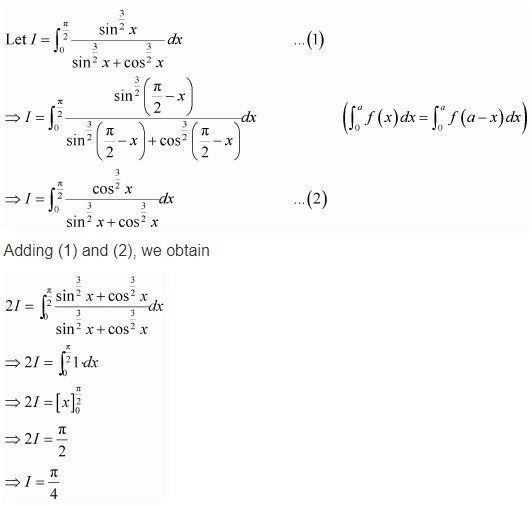
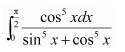
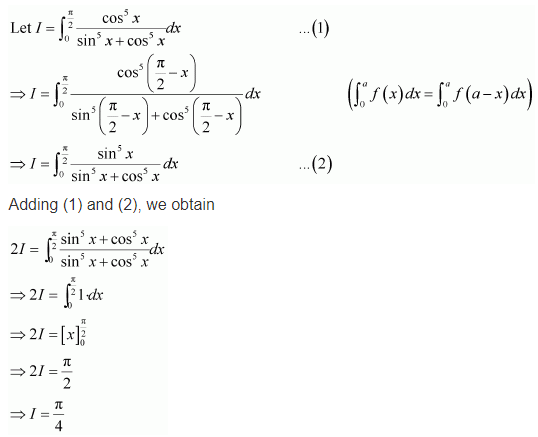
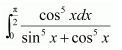
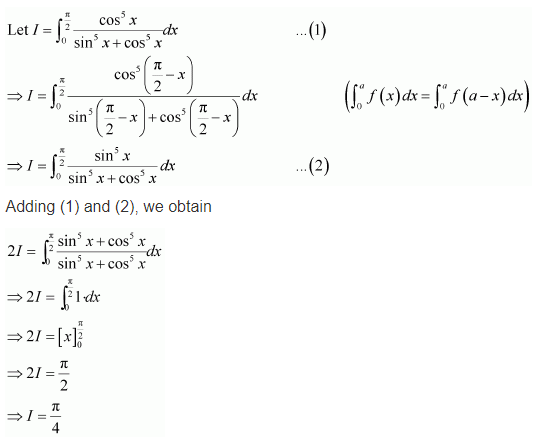
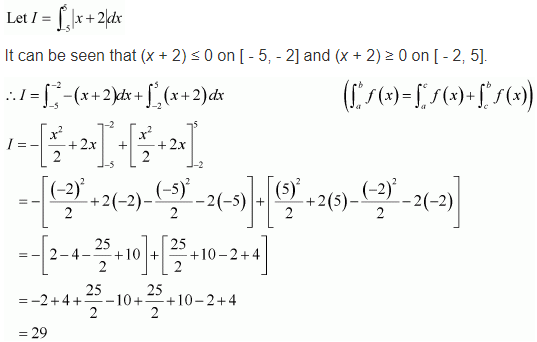
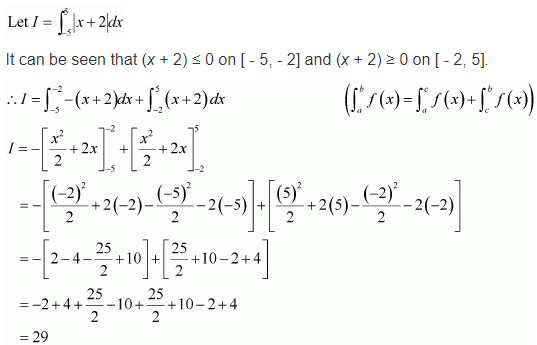
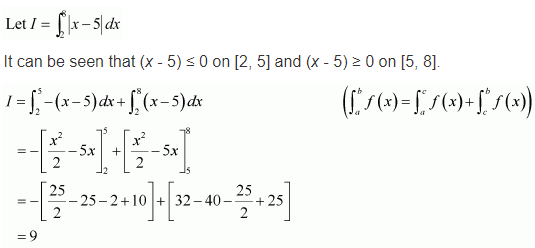
NCERT Solutions for Class 12 Maths Chapter 7 Ex 7.11
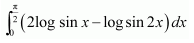
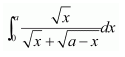
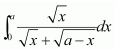
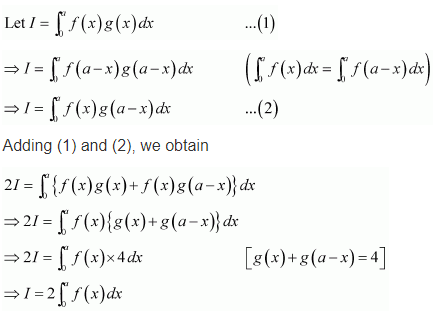
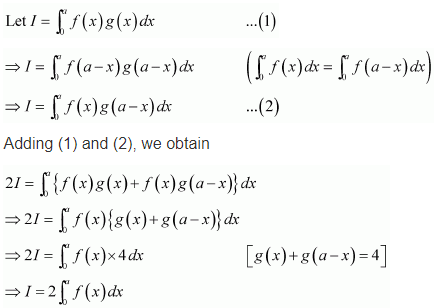
class 12 maths ncert solutions Ex 7.11 Q 1
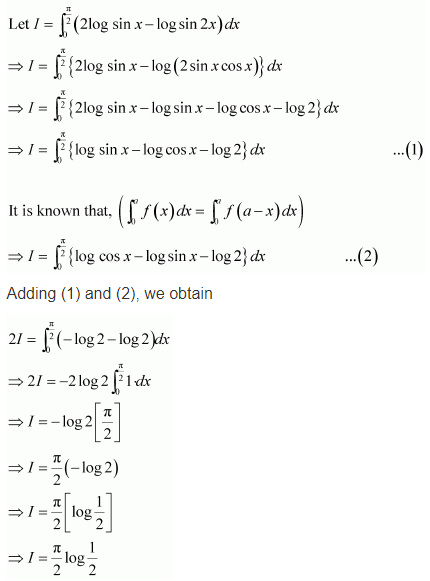
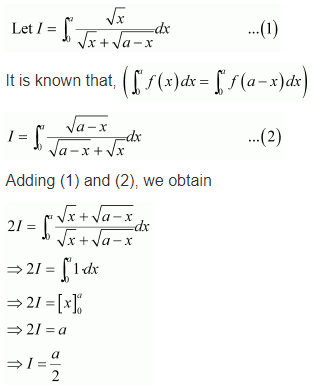
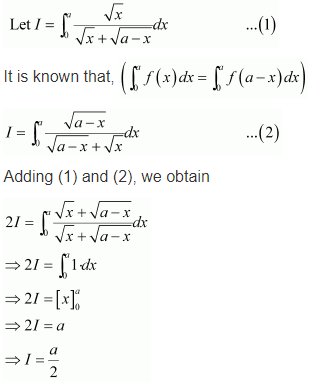
Ex 7.11 Integrals Class 12 Maths NCERT Solutions Sol 1
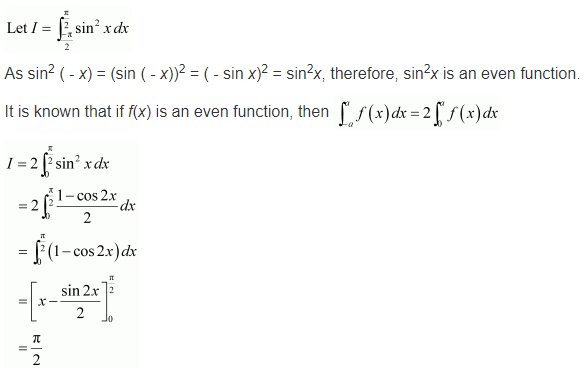
class 12 maths ncert solutions Ex 7.11 Q 2
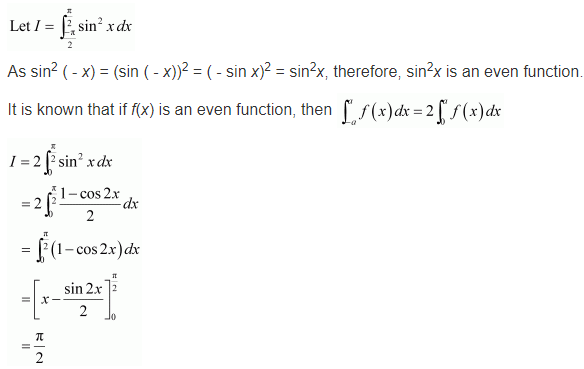
Ex 7.11 Integrals Class 12 Maths NCERT Solutions Sol 2
class 12 maths ncert solutions Ex 7.11 Q 3
Ex 7.11 Integrals Class 12 Maths NCERT Solutions Sol 3
class 12 maths ncert solutions Ex 7.11 Q 4
Ex 7.11 Integrals Class 12 Maths NCERT Solutions Sol 4
integrals ncert solutions Ex 7.11 Q 5
Ex 7.11 Integrals Class 12 Maths NCERT Solutions Sol 5
integrals ncert solutions Ex 7.11 Q 6
Ex 7.11 Integration Class 12 Maths NCERT Solutions Sol 6
integrals ncert solutions Ex 7.11 Q 7
Ex 7.11 Integration Class 12 Maths NCERT Solutions Sol 7
integrals ncert solutions Ex 7.11 Q 8
Ex 7.11 Integration Class 12 Maths NCERT Solutions Sol 8
integrals ncert solutions Ex 7.11 Q 9
Ex 7.11 Integration Class 12 Maths NCERT Solutions Sol 9
integrals ncert solutions Ex 7.11 Q 10
Ex 7.11 Integration Class 12 Maths NCERT Solutions Sol 10
integrals ncert solutions Ex 7.11 Q 11
NCERT maths solutions class 12 Ex 7.11 Sol 11
integration class 12 ncert solutions Ex 7.11 Q 12
NCERT maths solutions class 12 Ex 7.11 Sol 12
integration class 12 ncert solutions Ex 7.11 Q 13
NCERT maths solutions class 12 Ex 7.11 Sol 13
integration class 12 ncert solutions Ex 7.11 Q 14
NCERT maths solutions class 12 Ex 7.11 Sol 14
integration class 12 ncert solutions Ex 7.11 Q 15
NCERT maths solutions class 12 Ex 7.11 Sol 15
integration class 12 ncert solutions Ex 7.11 Q 16
NCERT solutions for class 12 maths Ex 7.11 Sol 16
integration class 12 ncert solutions Ex 7.11 Q 17
NCERT solutions for class 12 maths Ex 7.11 Sol 17
integration class 12 ncert solutions Ex 7.11 Q 18
NCERT solutions for class 12 maths Ex 7.11 Sol 18
integration class 12 ncert solutions Ex 7.11 Q 19
NCERT solutions for class 12 maths Ex 7.11 Sol 19
integration class 12 ncert solutions Ex 7.11 Q 20
NCERT solutions for class 12 maths Ex 7.11 Sol 20
integration class 12 ncert solutions Ex 7.11 Q 21
NCERT solutions for class 12 maths Ex 7.11 Sol 21
integration class 12 ncert solutions Ex 7.11 Q 22
NCERT solutions for class 12 maths Ex 7.11 Sol 22
integration class 12 ncert solutions Ex 7.11 Q 23
NCERT solutions for class 12 maths Ex 7.11 Sol 23
integration class 12 ncert solutions Ex 7.11 Q 24
NCERT solutions for class 12 maths Ex 7.11 Sol 24
integration class 12 ncert solutions Ex 7.11 Q 25
NCERT solutions for class 12 maths Ex 7.11 Sol 25
integration class 12 ncert solutions Ex 7.11 Q 26
Maths NCERT Solution Class 12 Ex 7.11 Q 26
integration class 12 ncert solutions Ex 7.11 Q 27
Maths NCERT Solution Class 12 Ex 7.11 Q 27
integration class 12 ncert solutions Ex 7.11 Q 28
Maths NCERT Solution Class 12 Ex 7.11 Q 28
integration class 12 ncert solutions Ex 7.11 Q 29
Maths NCERT Solution Class 12 Ex 7.11 Q 29
integration class 12 ncert solutions Ex 7.11 Q 30
Maths NCERT Solution Class 12 Ex 7.11 Q 30
Maths NCERT Solution Class 12 Ex 7.11 Q 30 - i
integration class 12 ncert solutions Ex 7.11 Q 31
Maths NCERT Solution Class 12 Ex 7.11 Q 31
Maths NCERT Solution Class 12 Ex 7.11 Q 31 - i
integration class 12 ncert solutions Ex 7.11 Q 32
Maths NCERT Solution Class 12 Ex 7.11 Q 32
integration class 12 ncert solutions Ex 7.11 Q 33
Maths NCERT Solution Class 12 Ex 7.11 Q 33
integration class 12 ncert solutions Ex 7.11 Q 34
Maths NCERT Solution Class 12 Ex 7.11 Q 34
integration class 12 ncert solutions Ex 7.11 Q 35
Maths NCERT Solution Class 12 Ex 7.11 Q 35
integration class 12 ncert solutions Ex 7.11 Q 36
Maths NCERT Solution Class 12 Ex 7.11 Q 36
integration class 12 ncert solutions Ex 7.11 Q 37
Maths NCERT Solution Class 12 Ex 7.11 Q 37
integration class 12 ncert solutions Ex 7.11 Q 38
integration class 12 ncert solutions Ex 7.11 Q 38 - i
Maths NCERT Solution Class 12 Ex 7.11 Q 38
integration class 12 ncert solutions Ex 7.11 Q 39
Maths NCERT Solution Class 12 Ex 7.11 Q 39
integration class 12 ncert solutions Ex 7.11 Q 40
integration class 12 ncert solutions Ex 7.11 Q 40 - i
Maths NCERT Solution Class 12 Ex 7.11 Q 40
integration class 12 ncert solutions Ex 7.11 Q 41
integration class 12 ncert solutions Ex 7.11 Q 41- i
Maths NCERT Solution Class 12 Ex 7.11 Q 41

NCERT Solutions for Class 12 Maths Chapter 7 Integrals Ex 7.11 in Hindi Medium

निश्चित समाकलनों में गुणधर्मों का उपयोग करते हुए 1 से 19 तक के प्रश्नों में समाकलनों का मान ज्ञात कीपिए—

प्रश्न 1.
एनसीईआरटी समाधान कक्षा 12 गणित अध्याय 7 प्रश्नावली 7.11
हल-
एनसीईआरटी समाधान कक्षा 12 गणित अध्याय 7 प्रश्नावली 7.11 पीडीएफ

प्रश्न 2.
एनसीईआरटी समाधान कक्षा 12 गणित अध्याय 7 प्रश्नावली एकीकरण 7.11
हल-
12 गणित ex 7.11

प्रश्न 3.
12 गणित exercise 7.11
हल-
एकीकरण 7.11

प्रश्न 4.
एकीकरण ex 7.11
हल-
12 गणित प्रश्नावली 7.11 एकीकरण

प्रश्न 5.
12 गणित अध्याय 7 ex. 7.11
हल-
प्रश्नावली 7.11 कक्षा 12

प्रश्न 6.
समाकलन 7.11
हल-
समाकलन ex 7.11

प्रश्न 7.
समाकलन exercise 7.11
हल-
7.11 12 गणित

प्रश्न 8.
एनसीईआरटी समाधान कक्षा 12 गणित अध्याय 7 प्रश्नावली 7.11 यूपी बोर्ड
हल-
एनसीईआरटी समाधान कक्षा 12 गणित अध्याय 7 प्रश्नावली 7.11 गुजरात बोर्ड

प्रश्न 9.
एनसीईआरटी समाधान कक्षा 12 गणित अध्याय 7 प्रश्नावली 7.11 मध्य प्रदेश बोर्ड
हल-
एनसीईआरटी समाधान कक्षा 12 गणित अध्याय 7 प्रश्नावली 7.11 हिंदी माध्यम

प्रश्न 10.
12 गणित अध्याय 7
हल-
प्रश्नावली 7.11 सभी प्रश्न
12 गणित 7.11

प्रश्न 11.
7.11 of 12 गणित
हल-
कक्षा 12 प्रश्नावली 7.11 समाधान

प्रश्न 12.
एनसीईआरटी समाधान कक्षा 12 गणित अध्याय 7 प्रश्नावली 7.11 गाइड मुक्त
हल-
कक्षा 12 गणित अध्याय 7 प्रश्नावली 7.11 गाइड

प्रश्न 13.
कक्षा 12 गणित प्रश्नावली 7.11
हल-
12 गणित समाकलन

प्रश्न 14.
कक्षा 12 गणित समाकलन
हल-
कक्षा 12 गणित अध्याय 7

प्रश्न 15.
अध्याय 7 कक्षा 12 गणित
हल-
एनसीईआरटी समाधान कक्षा 12 गणित अध्याय 7 समाकलन प्रश्नावली 7.11 यूपी बोर्ड

प्रश्न 16.
एनसीईआरटी समाधान कक्षा 12 गणित अध्याय 7 समाकलन प्रश्नावली 7.11 गुजरात बोर्ड
हल-
एनसीईआरटी समाधान कक्षा 12 गणित अध्याय 7 समाकलन प्रश्नावली 7.11 मध्य प्रदेश बोर्ड
एनसीईआरटी समाधान कक्षा 12 गणित अध्याय 7 समाकलन प्रश्नावली 7.11 हिंदी माध्यम
कक्षा 12 गणित अध्याय 7 समाकलन प्रश्नावली 7.11 यूपी बोर्ड

प्रश्न 17.
कक्षा 12 गणित अध्याय 7 समाकलन प्रश्नावली 7.11 गुजरात बोर्ड
हल-
कक्षा 12 गणित अध्याय 7 समाकलन प्रश्नावली 7.11 मध्य प्रदेश बोर्ड

प्रश्न 18.
कक्षा 12 गणित अध्याय 7 समाकलन प्रश्नावली 7.11 हिंदी माध्यम
हल-
कक्षा 12 गणित अध्याय 7 समाकलन प्रश्नावली 7.11 उत्तर प्रदेश बोर्ड
कक्षा 12 गणित अध्याय 7 समाकलन प्रश्नावली 7.11 मध्य प्रदेश माध्यमिक शिक्षा मंडल

प्रश्न 19.
12 गणित अध्याय 7 समाकलन प्रश्नावली 7.11 यूपी बोर्ड
हल-
12 गणित अध्याय 7 समाकलन प्रश्नावली 7.11 गुजरात बोर्ड

प्रश्न 20.
12 गणित अध्याय 7 समाकलन प्रश्नावली 7.11 मध्य प्रदेश बोर्ड
हल-
12 गणित अध्याय 7 समाकलन प्रश्नावली 7.11 हिंदी माध्यम

प्रश्न 21.
UP Board Solutions for Class 12 Maths Chapter 7 Integrals Ex 7.11
हल-
UP Board Solutions for Class 12 Maths Chapter 7 Integrals Exercise 7.11